Avoiding an appointment brings immediate relief. The brain learns from that relief: “I escaped, so the situation must have been dangerous.” The next booking can then feel even harder.
Meanwhile, a small dental problem may continue quietly. By the time pain forces a visit, treatment can be more involved—apparently confirming the fear that dental visits are always difficult.
This cycle is common:
worry → delay → short-term relief → problem grows → urgent visit → stronger worry
The cycle can be interrupted without jumping straight into treatment. A conversation-only visit or initial examination may be the first step.
“I hate the dentist” is difficult to solve because it contains many possible fears. Try finishing this sentence instead:
“The part I am most worried about is…”
Your answer might be:
- pain;
- an injection;
- hearing the drill;
- feeling judged;
- not being able to pause;
- learning that something is seriously wrong;
- the cost; or
- a previous experience.
Specific fears allow specific accommodations. If judgement is the concern, say that you have delayed care and need a no-lecture approach. If control is the concern, agree on a stop signal. If cost is the concern, ask for an examination, written options and priorities before committing to treatment.
When we are anxious, even a simple call can feel mentally expensive. Remove the need to improvise:
“I would like to book a dental assessment. I am an anxious patient, so please note that I need the dentist to explain each step and agree on a stop signal with me.”
You can send the same message on WhatsApp if speaking feels harder. Stating your need before arrival gives the team a chance to prepare.
No responsible dentist can promise that every sensation will be completely absent. They can, however, explain what is planned, discuss pain control, check that you are ready and pause when clinically safe.
At the start of the visit, agree on:
- what will happen today;
- whether treatment is planned or the visit is assessment-only;
- a hand signal that means “pause”;
- how the team will tell you before changing steps;
- what you prefer to know—and what you would rather not see; and
- how costs and alternatives will be explained.
Choice restores a sense of control. Control often matters as much as reassurance.
Anxiety fills empty attention with threat. A simple focus can help:
- Breathe out a little longer than you breathe in.
- Relax your shoulders and hands each time you notice tension.
- Count ceiling tiles or silently follow the rhythm of music.
- Wear headphones if the clinic says it is safe.
- Use the stop signal before anxiety becomes overwhelming.
A systematic review and meta-analysis of randomised trials found that interventions reduced dental anxiety overall in adults, although results varied by intervention and the certainty of evidence was not equally strong in every group. Audio-visual distraction and clinically appropriate sedation showed benefit in the analysed studies. Sedation is not necessary or suitable for everyone and requires individual assessment; it should never be treated as a casual add-on.
### If shame is keeping you away
Dental teams routinely see broken teeth, heavy calculus, bleeding gums, missing teeth and people returning after long gaps. These are clinical findings, not moral failures.
A useful clinic should help you answer three questions:
1. What needs attention now?
2. What can safely wait?
3. What is the simplest plan I can maintain?
If you feel judged or rushed, it is reasonable to ask for clarification or seek another clinician. Trust is part of care.
An anxious mind often imagines the entire journey at once: examination, injection, treatment, cost and recovery. Narrow the frame.
Your first commitment can be:
“I am booking an assessment so I can understand my options.”
That sentence preserves your autonomy. An assessment is information, not automatic consent to every proposed procedure.
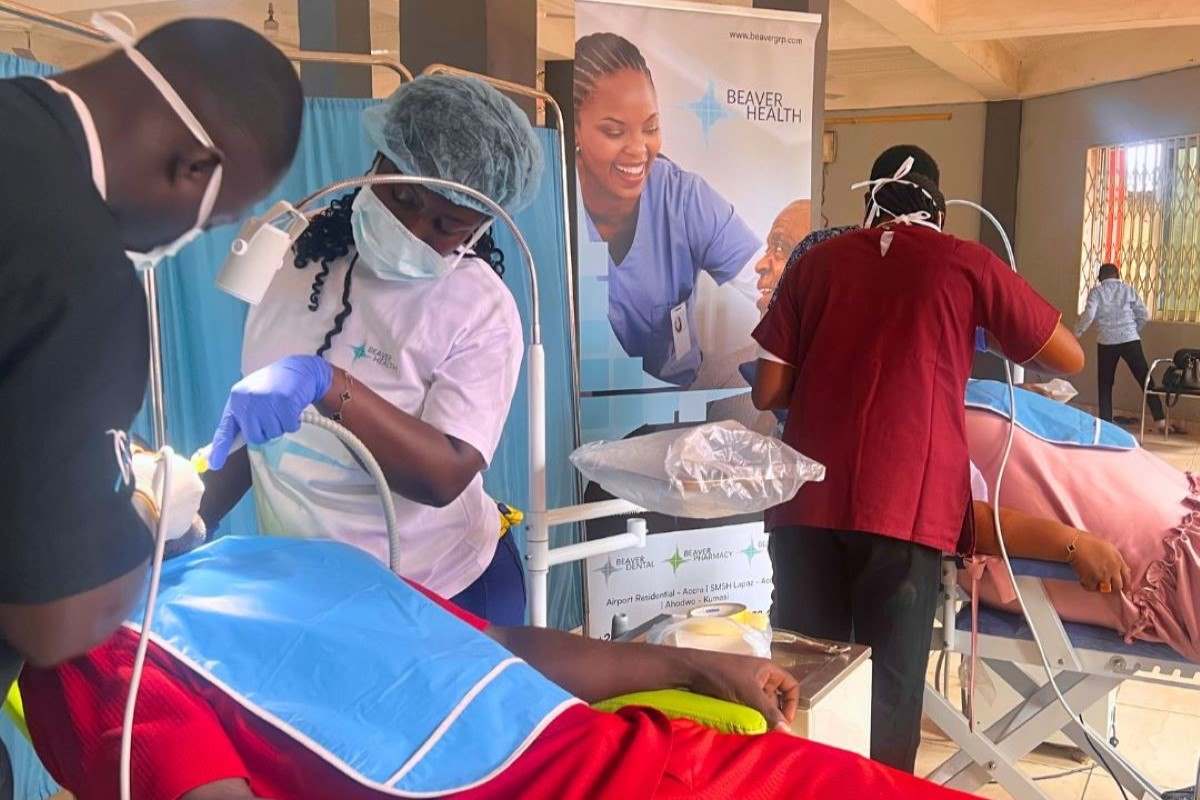
Beaver Dental has cared for patients in Ghana for more than two decades, within a wider Beaver Health network that includes medical and pharmacy services. For a nervous patient, the meaningful benefit is not the size of the network; it is the possibility of clear explanations, joined-up health information and a practical next step. When booking in Accra, say plainly that you are anxious and what would help you feel in control.
If English is not your first language, mention this during booking and ask what language support is available. Do not assume that a clinician speaks a particular language. For important decisions, make sure you understand the diagnosis, alternatives, risks, fees and aftercare before consenting.
Before leaving, write down the next step and ask any aftercare questions while the information is fresh. Then notice the parts you handled successfully:
- You made the booking.
- You explained what you needed.
- You attended.
- You paused when necessary.
- You learned what happens next.
This is not empty positive thinking. It gives your brain new evidence that a dental visit can be planned and manageable.
Severe anxiety, panic or trauma may need more support than a standard appointment can provide. Tell the clinic before treatment. A dentist can discuss staged care and whether a referral, psychological support or an appropriate sedation pathway should be considered.
Do not use alcohol, sedatives or someone else’s medicine to cope before an appointment. These can interact with treatment and affect consent and safety.
You do not have to solve every dental concern today. Send one message:
“I am nervous about dental treatment and would like to start with an assessment.”
For Accra patients, choose between:
- Beaver House, Airport Residential Area: the headquarters on Agostinho Neto Road, well placed for people living or working around the airport area.
- Emporium at Mövenpick Ambassador Hotel: on Independence Avenue in central Accra, particularly convenient for hotel guests, conference delegates, tourists and business travellers.
Beaver Health accepts enquiries via its website and WhatsApp. Ask the booking team to record your concerns, confirm the best location and explain what identification, records or insurance documents to bring.
Will the dentist judge me for waiting so long?
A professional dental team should focus on your current needs and options. Tell the team if fear or embarrassment caused the delay.
Can I ask the dentist to stop?
You can agree on a stop signal before treatment. There may be moments when the clinician must first make the situation safe, so discuss exactly how pauses will work.
Can I bring someone with me?
Ask the clinic in advance. A trusted person may help, although clinical, privacy and space considerations can affect whether they can remain during treatment.
Is sedation the best solution for dental anxiety?
Not automatically. The safest and most suitable approach depends on your health, anxiety level and planned procedure. It requires assessment by an appropriately trained clinician.
I am visiting Ghana. Can the clinic coordinate with my dentist at home?
Ask before treatment. Bring existing records and your dentist’s contact details. Where appropriate and with your consent, useful records can support continuity, but confirm the clinic’s process and any associated requirements.
Does international insurance cover dental treatment in Ghana?
It depends on the policy. Routine, emergency, restorative and cosmetic treatment may be treated differently. Contact your insurer for eligibility or pre-authorisation and ask Beaver Health what documentation or payment arrangement applies.
- Estimated prevalence of dental fear in adults: systematic review and meta-analysis
- Management of fear and anxiety in dental treatments: systematic review and meta-analysis of randomised controlled trials


%402x.svg)